Fermenting Excitement
Bubbling Bliss

What’s happening y’all?
Anybody see the NBA final? It ended up being during a Seahawks game, so I didn’t. Predictably, the NFL is struggling with Covid-19. European football hasn’t done well with it either, I heard the other day that Ronaldo got it. So yeah, looks like Covid-19 is still contagious.
Everybody making their Halloween plans? Age old question: to trick-or-treat or not to trick-or-treat. Luckily, I was informed years ago that I am too old, so I can check that particular decision off. Still though, I usually go to a party or at least out drinking. But this year? Hmm... And surprisingly, there are very few new costumes that incorporate a Covid-19 mask. I did find one from the movie Alien though that is amazing:

Fall is by far the best season, right? Leaves are at their prettiest, it’s not too cold, not too hot, all the houses put up Halloween decorations, everything is apple or pumpkin flavored… The Central Co-op near our apartment has a “guess the pumpkin’s weight” competition that I’m going to win. And Chris was so excited, Trader Joe’s has gluten free pumpkin beer!
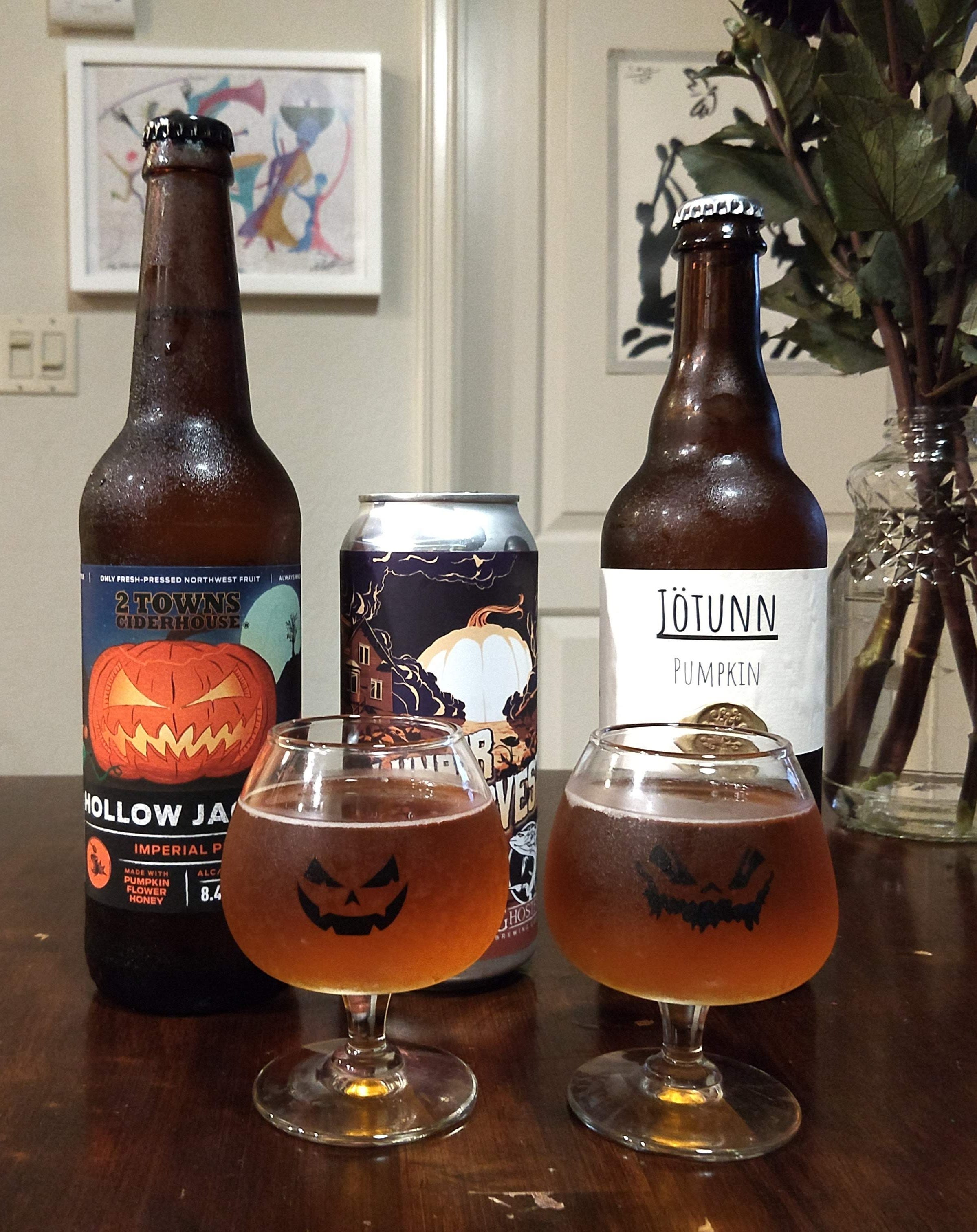
We used to love going to the Elysian Pumpkin Beer Festival every year, but five years ago Chris became gluten intolerant, so devastatingly, that ended that. But he found this one! And it tastes like the real thing. We also bought a pumpkin cider from 2 Towns to try that is made with a new recipe, (it’s improved and very good) and compared these with our pumpkin cider from last year. Sort of had a 2020 gluten free, Covid-19 free, pumpkin festival.
Motivation
Staying inspired and motivated to work on the business plan has been a bit of a challenge, especially when once in awhile I freak out and think this virus will never stop being a problem, worry that all our numbers rely on volume, and wonder how in the world we can ever start a business and survive let alone turn a profit. But, I typically find a “moment of zen” and get working. But wow, actually brewing again, that makes it so much easier. I get excited thinking about how this one will turn out, and how it will be even better than before. And this time, we get to use juice from our supplier!
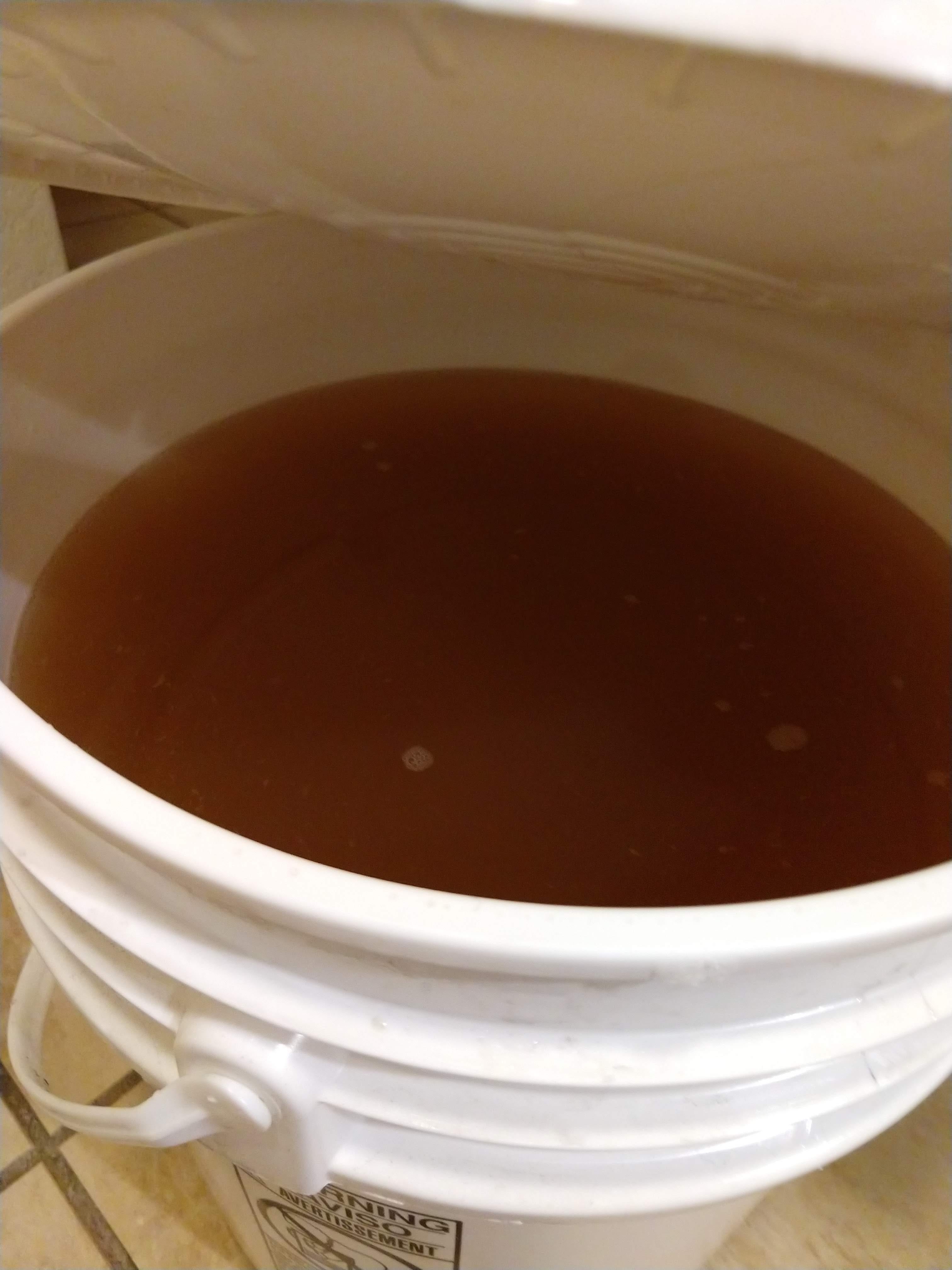
It arrived in a bucket. Partially frozen. It looks beautiful right? All rich and dark. Yeah this is gonna be good.
We pitched the yeast last weekend and it is happily fermenting in our ice water bath. There is enough juice to make two different batches (it fills our two kegs perfectly) and so we can make two flavors. For our standard apple cider, we usually make it semi-sweet or semi-dry (depends on the lingo you like) by adding back some straight apple juice after it is done fermenting so that there is more of an apple flavor and it’s a little sweeter. There isn’t enough apple juice left over for any add-back however, and I really don’t want to add store bought juice, so one batch I think we will just leave as a dry cider. It’ll probably taste less apple-y and kind of champagne like, but it will be nice to see how the new juice does.
For the other batch I’m thinking of repeating last year’s pumpkin cider. I really liked it, and I want to see how the new juice will taste and if we can easily replicate last year’s. It’s always good to make sure we can remake something we liked and our pumpkin cider included a lot of ingredients so it isn’t as easy to repeat as one of our various fruit flavored ciders.
Expenses
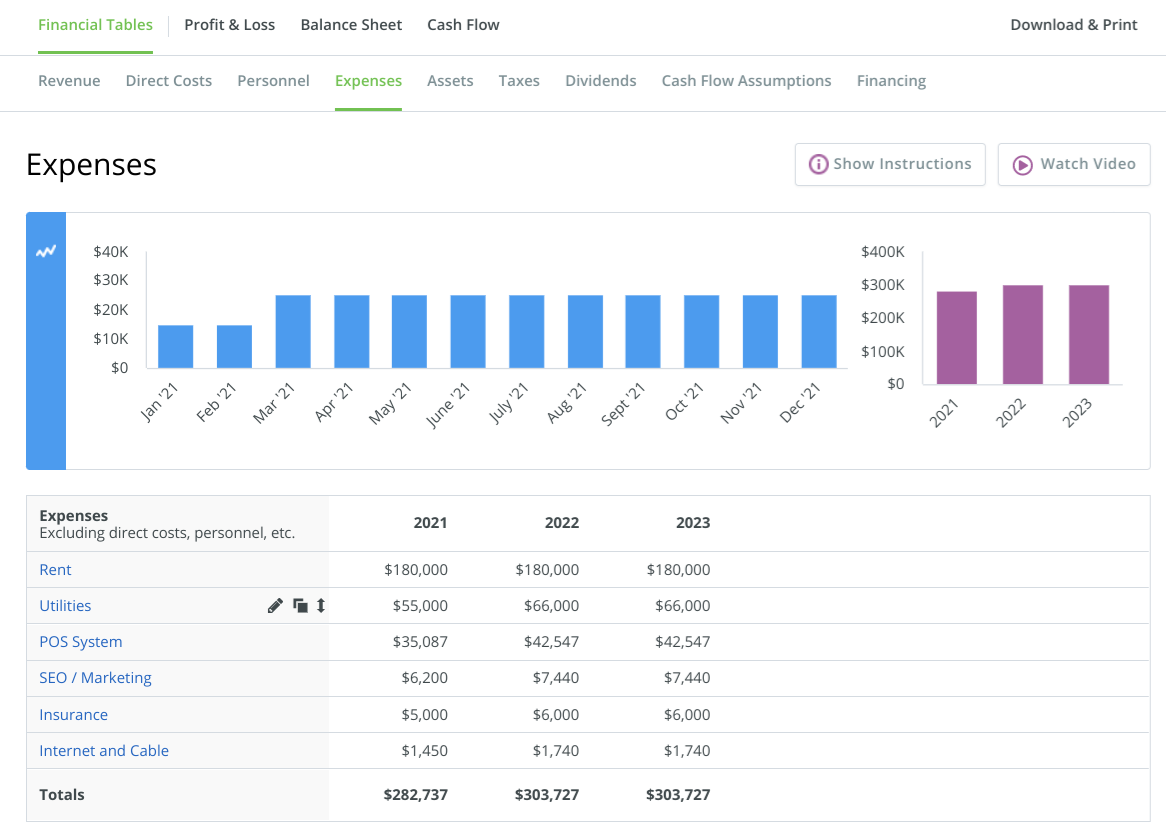
I finished up my expenses tab. Phew. These are very specific costs: they are different from direct costs which are raw materials needed to produce your product, they are different from labor to make the product, capital, and inventory. Expenses are things that must be paid for but are indirectly related to the product, like electricity and water, something you have to pay for whether or not you are currently making or selling anything. I had the option of entering these in as a constant amount, varying amount overtime, a percent of overall revenue or percent of a specific revenue stream. Most were a consistent amount, but the tricky one was our point of sales (credit card reader). It isn’t listed in any of the examples. It feels like a direct cost, because although some companies charge a constant monthly fee, many, and the one we will use, charge a monthly fee, interchange (the percent the bank will charge you per transaction) plus their own percent plus a flat fee per transaction. And these days, it’s hard to make a sale without it. But, thinking more about it, it’s not a “raw material” and we don’t have to replenish it after a sale. So, really, it’s like a utility. Only instead of lights which stay on no matter how many people are in the shop, this one is directly tied to sales. To find the percent of overall revenue, I had to do some averaging/guessing math, that I feel more confident about than maybe I should. But there you have it. POS is going to cost us 2.23% of overall revenue.
Image: Eviscerated by Sheila Sund / cc-by-2.0
Depreciation
The current financial table I’m working on is assets. These are where long lasting purchases are listed versus regular expenses that are short term. This section’s example is a company work van and the tank of gas to power it. The fuel is a short term purchase, bought one month and used in that month. That’s a regular expense. The van though, is different. It is an expensive purchase, and if treated like a one-time expense it might hurt the profitability of the business. But, it won’t be gone by the next month. It should have value to the company for years to come, so the idea is to spread the cost over time as well. In a financial statement, the van’s full value is recorded and then the amount of value it will lose each month (depreciation rate) is calculated and spread over it’s useful life. Only that smaller value (not the full value of the van) is expensed each month until the full value of the asset (van) has been depleted.
Kind of different. It’s what really good shoppers do in their heads when purchasing something. Like, yes this winter coat is expensive, but because it’s really well made I can wear it for years, costing me X amount each year. Or, this horrible quality shirt is cheap, but I’m really only going to wear it for Halloween.
The asset I’m working on are our fermenters. I have how many, and their price, but the depreciation? I found Australia’s standard depreciation charts online and saw that they estimate stainless steel wine tanks lasting 30 years. Most recommendations on various forms say the industry standard is seven years. The Colorado cidery that shared their plan with us has their depreciation rate being five years. The nice thing about saying that something will be used up and gone before it actually is, is that you don’t have to pay as much taxes. For instance, if we say we have to spend $30,000 on fermenters in five years, then $30,000 profit will go untaxed because it is assumed that we are either setting aside or currently spending $30,000 to replace our equipment. The problem with this though, is we have to be aware when it is deprecating for our own budgeting so that when it is gone we actually have that money to buy replacements, it shouldn’t just be in investors hands or in my new gold grillz. So undecided. More researching. I’ll see if I can’t find an actual life span of a fermenter. My guess is that constant cider making would be harder on the equipment than wine making. But by how much 🤷♀️ Hopefully I’ll know by next newsletter.
Thanks for reading and staying with us! We really appreciate it. Let us know how you’re doing or send us any questions and comments below:
In honor of Eddie Van Halen. Love his guitar solo in this song:
Previous Newsletter: Oafishly Organizing Our Organic Occupation